

Let’s face it. Talking about colorectal issues may feel uncomfortable, but this reluctance gives cancer an edge. As we delay thinking or talking about colorectal cancer symptoms, the disease can quietly spread and become more dangerous.
Colorectal cancer doesn’t wait for delays and postponements, as the numbers show.
South Carolina’s Department of Public Health (SCDPH) rates colorectal cancer as the third most common form of cancer (excluding skin cancers). According to the South Carolina Cancer Alliance, as many as 2,600 South Carolinians are diagnosed with the disease annually, and just under 1,000 people will die from it each year.
All from an illness they might have survived if it had been caught early and properly treated.
“There are a few cancers we can screen for that have really good screening tests - but this is one of them,” said Sarah Cottingham, MD, with Lexington Family Practice Forest Acres. "Getting screened is hugely important because there’s a one in 23 lifetime risk of colorectal cancer for men and one in 25 for women.”
Having a colonoscopy at age 50 was viewed as a rite of passage; the finale to middle age and the start of one's transition into senior status. But that half-century milestone is now a thing of the past.
“The recommended age for screening today is 45," Dr. Cottingham says. "So, if you're over 45 and haven't gotten it done, you need to talk to your doctor. In fact, it's unfortunately on the rise in younger people.”
That’s right: a disease commonly associated with the middle and latter stages of life is now increasing in those in their peak years.
“We’re finding it more in young people,” Dr. Cottingham acknowledged. “Those born in the 1990s and later, in particular, have a higher risk. A lot of it is believed to be associated with diet - how bad the American diet is - and then you throw in a lack of physical activity. So, people born around 1990 have twice the risk of colon cancer and four times the risk of rectal cancer than those born around 1950.”
Knowing what to do is one thing; actually doing it is something different. Many people put off screening, often for a specific reason.
It's due to what the medical community delicately refers to as the “prep” before the screening. In layman’s terms, that means cleaning your insides out so doctors can get a good look at the colon’s lining.
“The gold standard for screening is a colonoscopy,” Dr. Cottingham continued. “That's what is recommended. If I'm getting screened for cancer, I want the gold standard. I tell my patients they should want the gold standard, too."
“The prep itself isn’t fun," Dr. Cottingham admitted. "It's twelve hours the day before the procedure. There are now different options available based on your personal history."
"There are options like pills with drinks and even MiraLax prep. Your provider will recommend what achieves the best outcome."
There are additional screening methods besides colonoscopy.
"The fecal immunochemical test (FIT), for example, is a noninvasive method where people take a card home, collect a stool sample, and send it back for us to test. It's easy and is increasingly used for screening. For those who have not had a colonoscopy in ten years, screening every three years with FIT is an option to ensure nothing is developing."
Cologuard is another option. It is a screening test for adults over forty-five years old at average risk that uses a stool sample to detect 92% of colon cancers.
"Cologuard goes a step further than FIT," she said. "It checks your stool for blood, as FIT does, but also looks for certain DNA changes from precancerous or cancerous polyps. This can help detect those polyps that may be missed by other tests."
"However, if either the FIT or Cologuard test comes back positive, you will still need a colonoscopy to confirm the results and remove any polyps. Because of this, many people choose to start directly with a colonoscopy, which is the most comprehensive screening method available," Dr. Cottingham explained.
Regardless of the screening method, time is critical. Successful treatment depends on early detection.
“It all depends on the stage, obviously," Dr. Cottingham said. "So if you have a small polyp or a larger one, pre-cancerous or cancerous, they can remove it. Sometimes they have to remove part of the colon, depending on how large the polyp is. But as long as it's not outside the colon wall and there's no spread, that may be all the treatment you need. Now, if it's spread to more lymph nodes and elsewhere, then we're talking about a different stage of cancer, a whole different treatment: chemo, radiation, surgery, those kinds of things are necessary. So, the sooner it's detected, the better.”
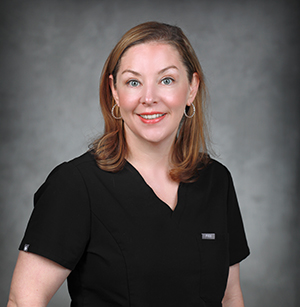
Sarah Cottingham, MD, Lexington Family Practice Forest Acres



Leave a comment