
Watching your child grow is one of the most rewarding parts of parenthood. But sometimes a pediatrician may notice that a child isn't gaining weight as quickly as expected. This is known as growth faltering, a term that has replaced "failure to thrive."
Growth faltering does not necessarily mean there is something seriously wrong. Children grow at different rates, and a child's growth pattern is best understood by looking at changes over time. When a pediatrician notices that a child's weight gain is slowing or falling off their expected growth curve, they may recommend closer monitoring to understand why.
What causes growth faltering?
"There are many possible causes of growth faltering, and sometimes more than one factor may be involved. The most common reason is that a child simply isn't taking in enough calories to support expected growth," said Elizabeth A.L. Otersen, MD, with Lexington Pediatric Practice.
For infants, this may happen because of premature birth, difficulty feeding, or a lack of interest in eating. Older children may have a limited appetite or other challenges that make it difficult to consume enough calories.
Other causes generally fall into two categories.
The body is using too many calories. Some children may eat an appropriate amount but burn more calories than expected. This can occur with certain medical conditions, including congenital heart disease or bronchopulmonary dysplasia in babies born prematurely.
The body isn't absorbing enough calories. In some cases, a child eats enough, but their intestines don't properly absorb the nutrients. Conditions such as cystic fibrosis and celiac disease can cause this type of problem.
What are the signs of growth faltering?
Growth faltering can look different depending on a child's age.
In babies and young infants, excessive sleepiness may be a sign. This can be particularly difficult for parents to recognize because a sleepy baby may seem like a "good sleeper."
Older children may experience symptoms such as chronic diarrhea, vomiting or refusal to eat. A child's weight may also stop increasing as expected.
Regular well-child visits are important because pediatricians can identify changes in growth before parents necessarily notice a problem at home.
Why is weight gain so important for babies?
Pediatricians pay particularly close attention to weight gain in infants because weight provides important information about both hydration and development.
"Babies can become dehydrated much more quickly than adults if they lose weight or don't take in enough fluids. Adequate nutrition is also essential for the rapid brain growth and development that occurs during infancy and early childhood," Dr. Otersen said. "Infants need healthy calories and fats to support their brain's rapid growth and development during the first years of life."
How is growth faltering diagnosed?
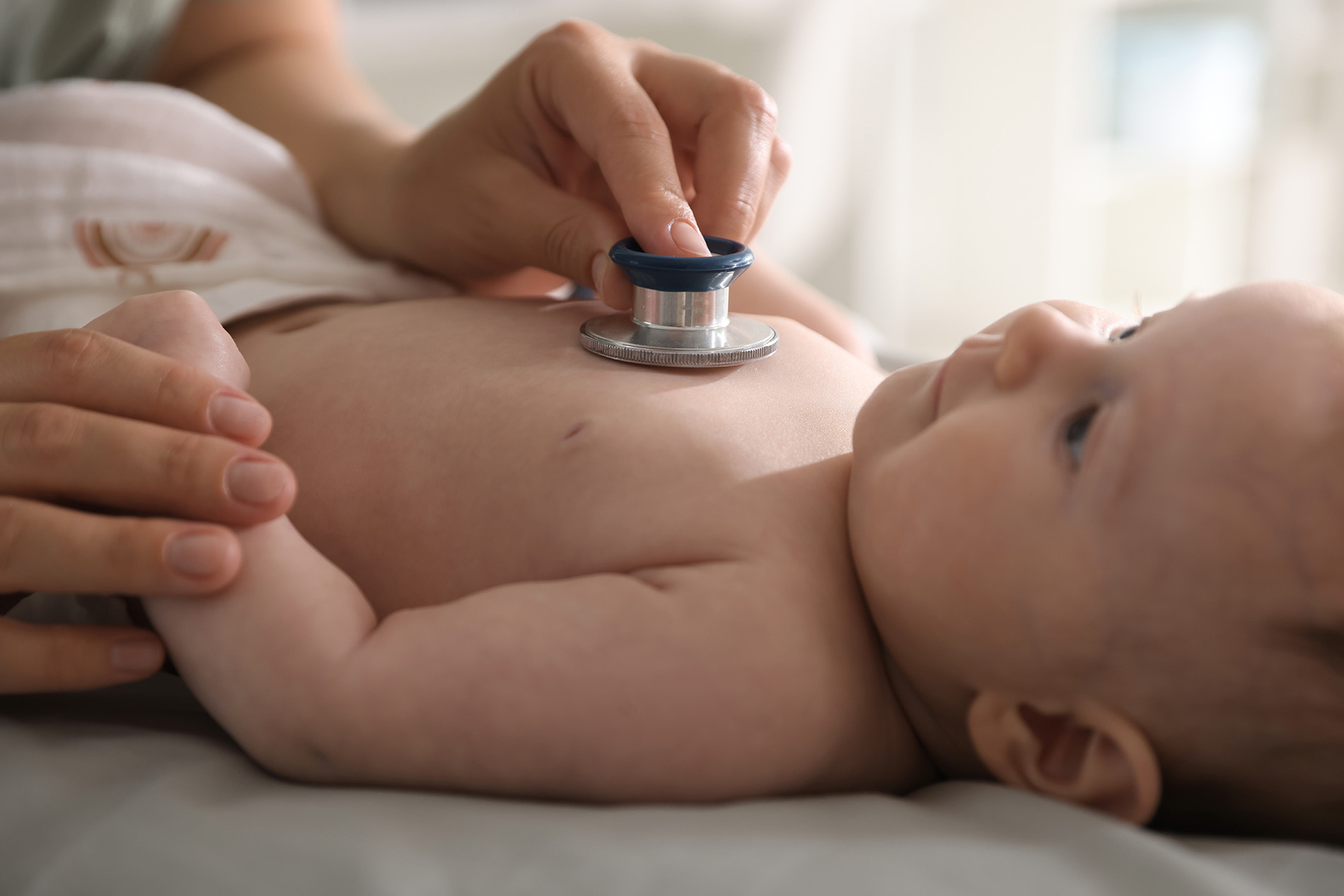
At every well-child visit, pediatricians measure a child's weight, length or height and plot those measurements on a growth chart. Rather than looking at one measurement in isolation, doctors pay close attention to the trend over time.
Pediatricians are trained to recognize when a child's growth pattern changes in a way that may indicate growth faltering.
Technically, growth faltering can be defined as a child falling below the 5th percentile on the weight-for-length curve. Pediatricians use standardized growth charts to help assess whether a child is growing as expected.
For children from birth through age 2, pediatricians use World Health Organization (WHO) growth charts. For children ages 2 through 20, they use growth charts from the Centers for Disease Control and Prevention (CDC).
Importantly, being at a lower percentile does not automatically mean a child has a growth problem. Some healthy children are naturally smaller than others. What matters is how a child is growing over time and whether their growth pattern changes.
How is growth faltering treated?
Treatment depends on the reason a child isn't gaining weight as expected. In many cases, the first step is to increase the number of calories the child consumes.
For babies and infants, this might involve offering more formula or increasing the caloric content of formula under a pediatrician's guidance. For older children and adolescents, pediatricians may recommend adding more energy-dense foods to their diets.
If increasing calorie intake does not improve growth, the pediatrician may recommend additional testing to look for an underlying cause. This could include blood tests or referrals to specialists, such as a registered dietitian or gastroenterologist.
What can parents expect?
Hearing that your child isn't growing as expected can be frightening, but growth faltering is often evaluated gradually. Parents may have more frequent visits with their pediatrician to monitor the child's weight and growth closely.
That ongoing monitoring is important. A single weight measurement may not tell the whole story, but seeing how a child grows over several weeks or months can provide valuable clues.
If growth continues to falter, your pediatrician can help identify strategies to increase calorie intake and determine whether additional testing or specialist care is needed.
"It is always scary when the pediatrician says your child is not growing as expected," Dr. Otersen said. "Your doctor will be your child's biggest advocate and will do everything they can to make sure they grow up to be as strong as possible."
For parents, the most important thing is to keep regular well-child appointments and talk with your pediatrician if you have concerns about your child's eating, weight gain or development. With careful monitoring and the right support, pediatricians can help identify why growth is faltering and develop a plan to help children thrive.

Elizabeth A.L. Otersen, MD, Lexington Pediatric Practice




Leave a comment